Apple opens its on-device model to all apps with the Foundation Models framework
Apple opened its on-device foundation model to third-party apps at WWDC25 on June 9, 2025. The Foundation Models framework gives any app direct access to the roughly 3-billion-parameter model, which runs offline and costs developers nothing per call.
Developers annotate Swift data structures with the @Generable macro, and the framework applies constrained decoding, which Apple calls guided generation, so the model returns those structures rather than free text. Tool calling lets the model invoke functions the app supplies. Developers who need more control can train rank 32 adapters with a Python toolkit.
Apple compressed the model to 2 bits per weight using quantisation-aware training. It splits the transformer into two blocks at a 5:3 depth ratio and shares the key-value cache between them, which Apple says cuts KV cache memory use by 37.5 percent. Images are handled by a 300M-parameter ViTDet-L vision encoder.
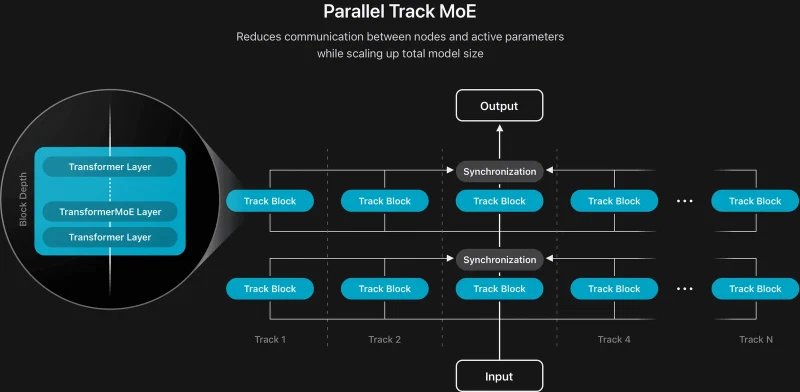
The model is designed to support 15 languages. The companion server model on Private Cloud Compute uses what Apple calls a Parallel-Track Mixture-of-Experts design, where independent transformer tracks cut how often the tracks have to synchronise with each other.